Reading time: 8 minutes
In the west, and especially Europe, the most horrific regime of WWII is often portrayed as the Nazi regime, with Imperial Japan’s role in the wider world war being somewhat neglected – most well known for being the victim of the world’s first nuclear weapons.
What is often not as well-known is just how brutal and cruel the Imperial Japanese Government was.
While many place the start of WW2 at the invasion of Poland by Germany in 1939, in truth, the global war had started many years before. In 1931, Japan became one of the first Axis Powers to start the war in earnest, invading a section of China called Manchuria.
From 1931 until its defeat in 1945, Imperial Japan would brutalise vast swathes of Asia and during its Pacific War for territorial expansion.
The Rise of Fascism and Imperialist Aims
1930s Imperial Japan was a combination of ancient tradition and monarchy, recent industrialisation and a realisation that to compete as a significant power on the world stage, Japan would need to acquire external resources through either trade or conquest.
Following the Meiji Restoration of 1868, Japan rapidly modernised and industrialised, seeking to match Western powers in military might and territorial control as it brought in gunpowder, railways, and other modern technology.
The nation’s limited natural resources and growing population created pressure for expansion. Initially, Japan saw victories in regional wars such as the First Sino-Japanese War (1894-1895) and the Russo-Japanese War (1904-1905).
By the 1930s, ultranationalist and fascist movements had gained significant influence within Japanese society and government. The military increasingly controlled political decision-making, with Japan’s civilian government becoming subordinate to military leadership.
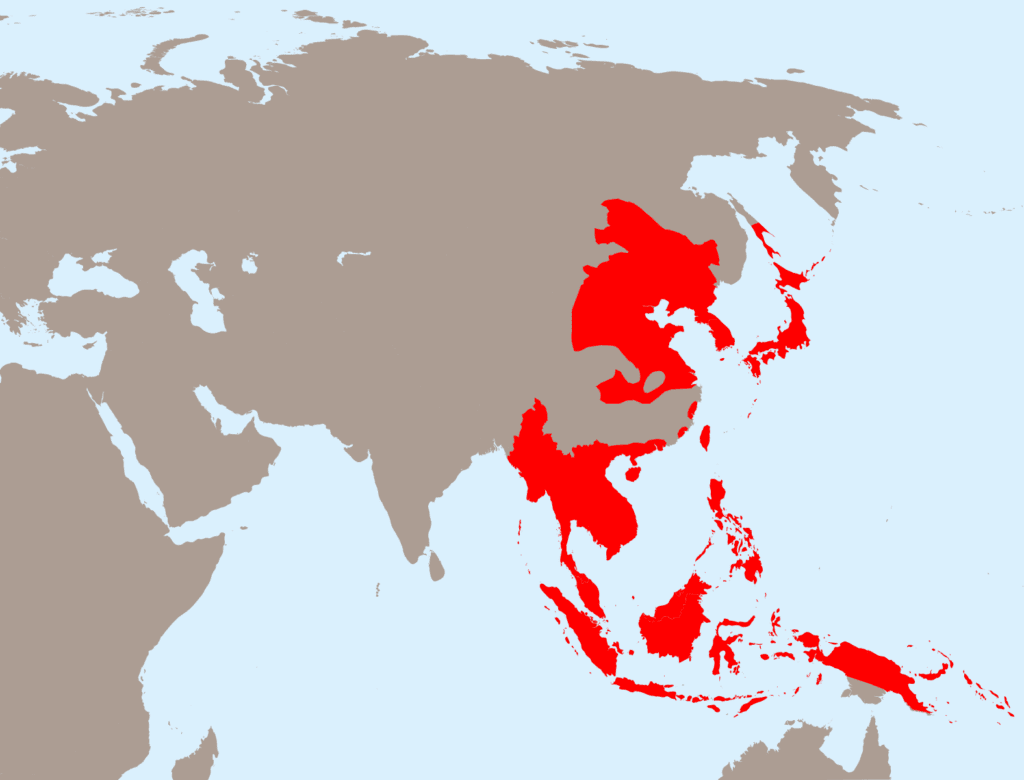
As the global Great Depression hit, and America introduced large tariffs on key military materials such as oil and metals, Japan’s desire to expand for resources hardened.
Bushido and the Warrior Code
While it cannot account for all of the brutal atrocities committed by Imperial Japan throughout the war, their interpretation of the traditional “Warrior Code” or Bushido does give insight into the attitudes of the Japanese military.
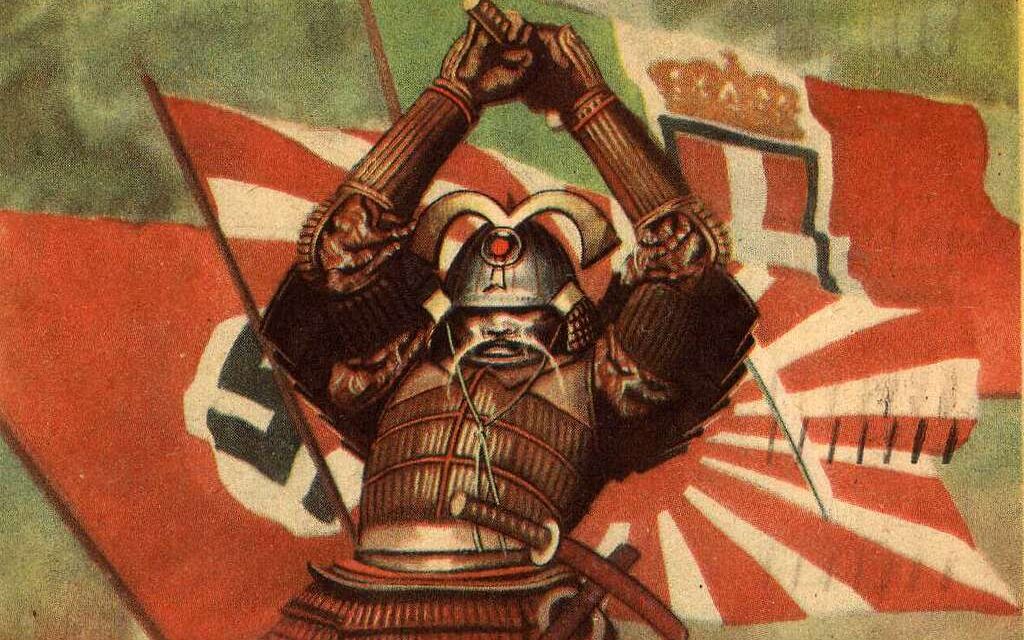
Often known as the code of the samurai, historically, Bushido emphasised concepts like honour, loyalty, and self-sacrifice. For Imperial Japan’s military leadership, death over surrender became the leading principle.
The average Japanese soldier was taught that the Emperor was divine, and that dying for the empire was the highest honour. For senior Japanese military command, the core solution to any problem was simply more willpower. This ideology dehumanised enemies and portrayed mercy as weakness.
Invasion of the World
Beginning in earnest with the invasion of Manchuria in 1931, Japan would eventually launch a full-scale invasion of China in 1937, and of course launch its infamous attack on Pearl Harbour in 1941, further expanding into South East Asia.
The Nanjing Massacre
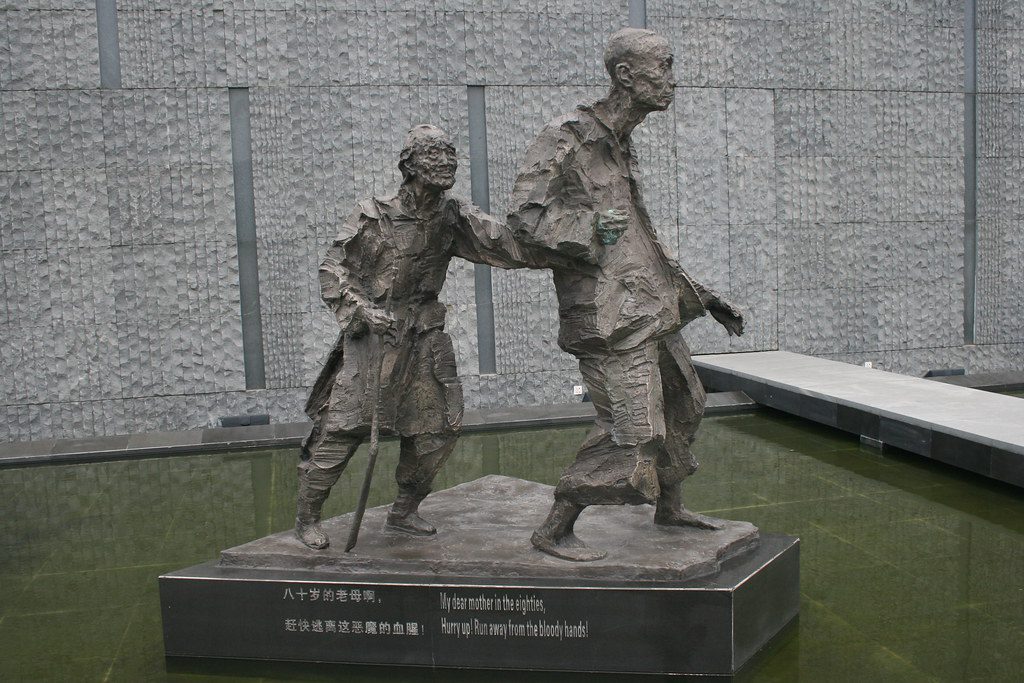
Arguably the most famous, and certainly one of the most appalling war crimes of the Japanese Army was its massacre of the Chinese city and former capital of Nanjing, often called “the rape of Nanjing”.
From the beginning of the siege to taking the city after December 1937 and the horrific aftermath, it’s estimated that between 100,000 and 300,000 Chinese civilians were killed by the Japanese army. However, it not simply the scale of the deaths that attracts attention. Rather, it was the abhorrent actions of the Japanese army, led by the commanding general of the Japanese Central China Front Army, Matsui Iwane, that shocked the world. Upon seizing the city, Iwane explicitly ordered his soldiers to loot the city, carry out large numbers of mass executions of civilians, and carry out tens of thousands of rapes across the city.
Unit 731
Not even acknowledged by the Japanese government until the 1990s, Japan’s now infamous Unit 731 has often been dubbed the “Asian Auschwitz”, not for its scale, but for its cruelty.
The unit was originally established by the military police of the Empire of Japan in around 1935 but was quickly taken over by military medical officer General Shirō Ishii, who led it until the end of the war. The program received generous support from the Japanese government and collaborated closely with the Imperial Army right up until the end of the war in 1945.
Although the exact number of victims remains a mystery, estimates place the number at roughly 14,000 direct victims of the camp, tortured and experimented on by almost 3,000 staff.
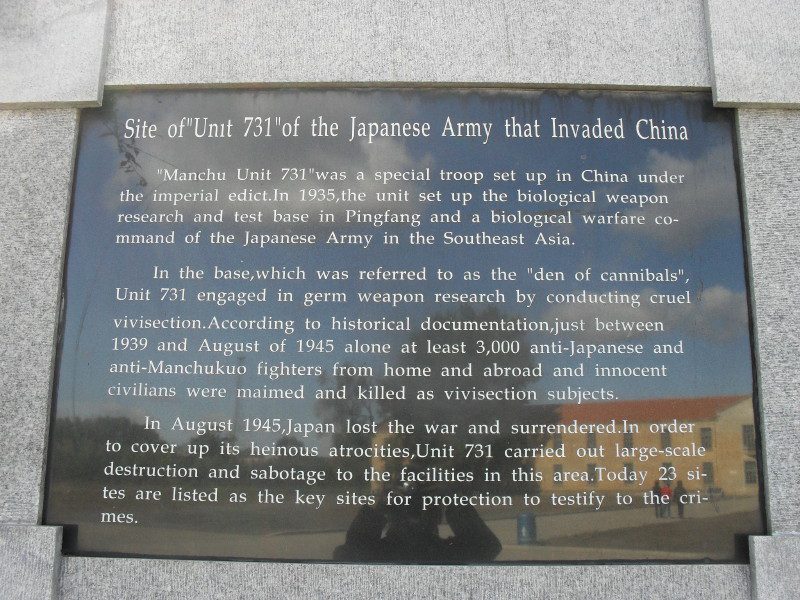
Most victims were Chinese civilians, though others included Russians, other prisoners of war, and worst of all, the children who were born following rape by staff of female prisoners. The victims were subjected to a range of horrific experiments, including deliberate infection with disease, controlled dehydration, biological weapons testing, hypobaric pressure chamber testing, vivisection, organ harvesting, amputation, and conventional weapons testing.
Not a single Unit 731 victim escaped.
Yet, it wasn’t just the tragic prisoners of the camp who suffered.
As part of the Japanese Imperial Army’s aim to perfect biological warfare, they began releasing test pathogens into unsuspecting Chinese villages in 1942. By 1939, Ishii had narrowed his laboratory findings to six suitable pathogens: anthrax, typhoid, paratyphoid, glanders, dysentery and plague-infected human fleas – which were then used as part of plague bombs in mainland China.
It’s estimated that this biological warfare conducted by Unit 731 resulted in at least a further 200,000 dead, with many more suffering from infection.
“Comfort Women”
Annexed in 1910, Korea saw the Japanese army force thousands of women to work as “comfort women”. This practice was also replicated in many other Japanese occupied territories.
Continued both before and during the war, the Imperial Japanese Army established and ran “Comfort Stations” for its soldiers and officers, filled with coerced women serving in sexual slavery.
In the beginning, comfort stations were primarily filled with voluntary Japanese prostitutes. However, as Japan began to expand in the 1930s, they began the practice of coercion and lies, typically promising other forms of work to bring unsuspecting young women, typically Korean, Taiwanese and sometimes Chinese, into the comfort stations – to then be held against their will.
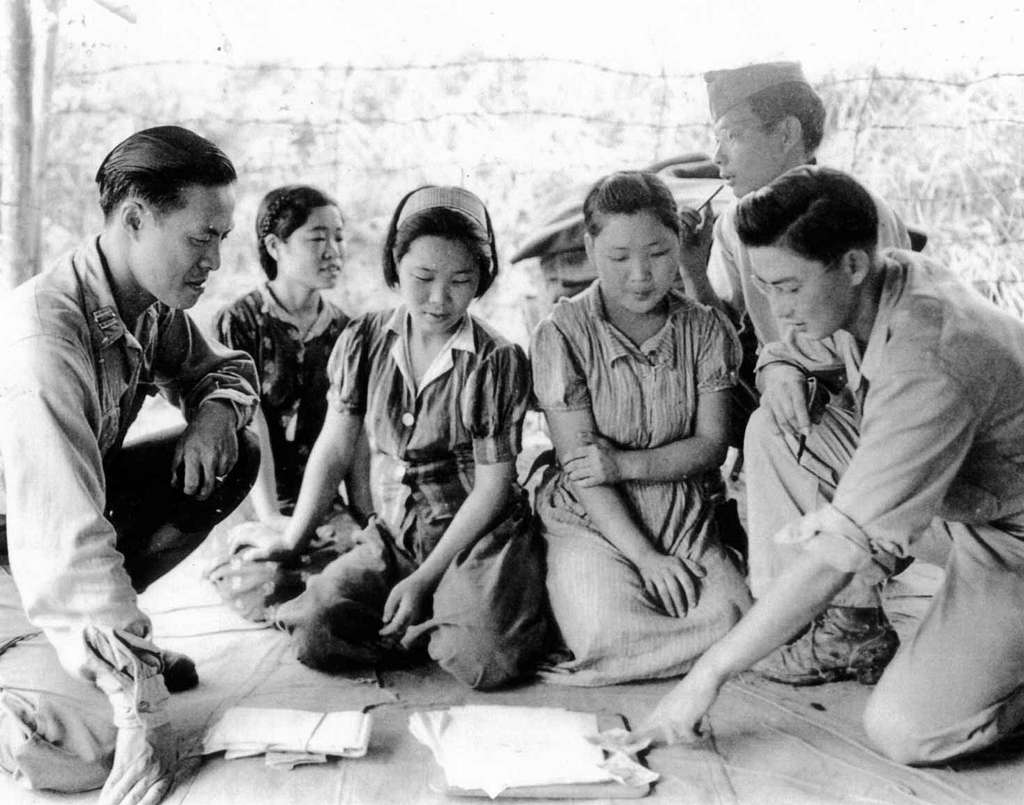
As the war went on, the Japanese Military began using soldiers and the local police force to take women directly out of their homes under the threat of violence.
No true figure has ever been agreed for the number of victims who endured this crime, however, estimates place it between 20,000 and 410,000 women who suffered, predominantly from Korea.
End of the War and Tokyo Trials
Following the defeat of Japan in 1945, the International Military Tribunal for the Far East, commonly known as the Tokyo Trials, was established to prosecute major war criminals.
Several top officials, including Prime Minister Hideki Tojo, were executed, while others received lengthy prison sentences.
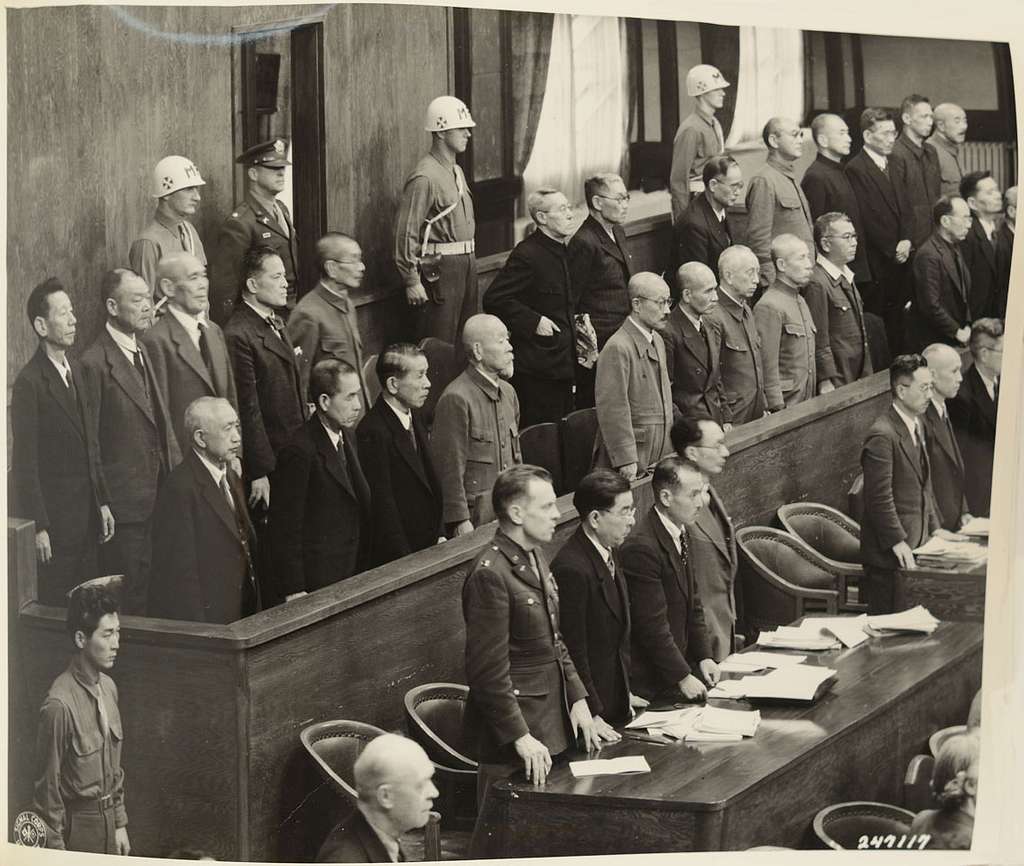
Yet, many key senior figures escaped justice due to politics – most notably the Emperor of Japan, who the Americans wished not to become a Martyr, and the wider Japanese government refused to acknowledge the Emperor knew of any crimes committed.
Many perpetrators and members of Unit 731 escaped any punishment whatsoever.
From the USA, much like with Nazi scientists, high-ranking officials of Unit 731 including General Ishii received immunity directly from General Douglas MacArthur, in exchange for sharing their knowledge gained by their horrific experiments.
On the Soviet front, captured Unit 731 members were put on trial at the Khabarovsk trials. Yet even here, after several perpetrators admitted to directly torturing, experimenting, and killing Soviet citizens, they were granted lenient sentences of 2 to 25 years in a Siberian labour camp in exchange for their knowledge.
Defining Morality in War
War. War never changes.
It is always the innocent who suffer the most. Yet, some wars, and some actions, are undeniably worse than others. In a global conflict marked if by anything, by its horrifically high death toll of an estimated 85 million, some crimes of WWII stand out as exceptionally brutal and barbaric.
Well-known are the crimes of Nazi Germany, and there can be no denying that all sides committed atrocities of one form or another. Some consider the atomic bombings to be a war crime, for example, and the Red Army’s campaign of rape and murder on their march to Berlin was horrific.
Despite this, Imperial Japan’s crimes against humanity – a disregard for life or human suffering – ring as a particularly uncomfortable reminder of what humans can be capable of.
Podcast episodes about Japanese War Crimes during WWII
Articles you may also like
General History Quiz 73
Weekly 10 Question History Quiz.
See how your history knowledge stacks up!
1. Where was Edward Teach, also known as Blackbeard killed?
Love Thy Neighbour: The Importance of Guest Rights in Medieval England
Reading time: 7 minutes
In almost every country in the modern world, although some more than others, various institutions, laws and social norms protect travellers. Yet the institutions such as the courts and the government, or the enforcing bodies such as the police, have not always existed.
The Afghan Wars 1839-42 and 1878-80 – Audiobook
The First Anglo–Afghan War was fought between British India and Afghanistan from 1839 to 1842. It was one of the first major conflicts during the Great Game, the 19th century competition for power and influence in Central Asia between the United Kingdom and Russia, and also marked one of the worst setbacks inflicted on British power in the region.

The text of this article was commissioned by History Guild as part of our work to improve historical literacy. If you would like to reproduce it please get in touch via this form.