World War I in Broken Hill: a Turkish-Inspired Attack on Australia’s Home Soil
Reading time: 14 minutes From August 1914 to November 1918, over 416,000 men served in Australian...
Read MoreReading time: 14 minutes From August 1914 to November 1918, over 416,000 men served in Australian...
Read MoreReading time: 6 minutes
Many factors contributed to making the Gallipoli battlefield an almost unendurable place for all soldiers. The constant noise, cramped unsanitary conditions, disease, stenches, daily death of comrades, terrible food, lack of rest and thirst all contributed to the most gruelling conditions.
Reading time: 7 minutes
As we undertake our annual remembrance of Australians at war, some attention should be paid to those personnel who were taken captive by the enemy and then faced long years in brutal conditions. Enduring starvation, beatings, disease, death marches and forced labour in extreme climatic conditions, many of them died from casual neglect, deliberate abuse and untreated medical conditions. And I’m not talking about prisoners of the Japanese in World War Two, but Australians taken captive by Ottoman forces during The Great War.
Reading time: 5 minutes
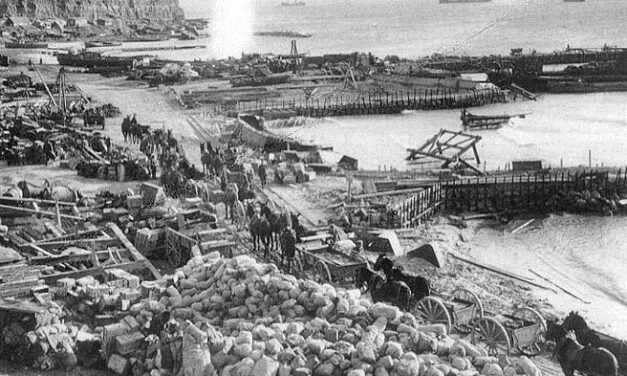
There are few geographical areas that have seen as much military action as the Gallipoli region, the site of the Anzac landings in 1915. The conflicts in the region include some of the most renowned wars from Greek antiquity.
Reading time: 6 minutes
With almost the same number of soldiers as the Anzacs – 79,000 – and similar death rates – close on 10,000 – French participation in the Gallipoli campaign could not occupy a more different place in national memory. What became a foundation myth in Australia as it also did in the Turkish Republic after 1923 was eventually forgotten in France.
Reading time: 8 minutes
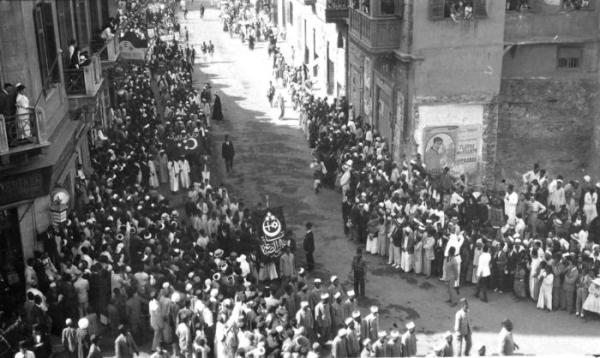
The events of 1919 in Egypt show how the First World War played a crucial role in affecting the country’s history after the war ended.The interwar years saw a political dance take place between the British, Egyptian nationalist politicians, and the Egyptian king, who mistrusted the nationalists. It would take the upheaval of the Second World War and a further Egyptian Revolution in 1952 for the British to leave Egypt. The last British troops left in June 1956, although the Suez Crisis later that year saw their temporary return. While the Egyptian Revolution of 1919 did not secure Egypt’s freedom from foreign rule, it was an important step towards that goal. After 1919, the British had to consider the strength of Egyptian nationalism and deal with nationalist politicians. The Revolution was an inspiration for other anti-colonial struggles across Africa and Asia. The events of 1919 in Egypt show how the First World War played a crucial role in affecting the country’s history after the war ended. The negative effects of the war on Egypt unleashed powerful forces in Egyptian politics and society that could not be ignored.
Reading time: 6 minutes
In a series of conferences in a succession of European palaces, Prime Minister David Lloyd George, Georges Clemenceau of France, Woodrow Wilson and dozens of other leaders conspired, harangued and horse-traded from 1919 to 1921. Under clouds of cigar smoke, between servings of foie gras and champagne, they redrew a large swath of the globe’s map.
Their guiding principle for redrawing the map, at least in most cases, was the reigning concept of race nationalism, what’s often called today ethno-nationalism.
Read MoreOver one hundred years ago, one of the most remarkable operations in military history occurred at the Dardanelles with the evacuation in December 1915 of 83,000 Australian, New Zealand, British and Indian troops from the Gallipoli Peninsula without a single loss of life. It will, as, one contemporary German correspondent reporting from the Turkish lines exclaimed, ‘stand before the eyes of all strategists as a hitherto unattained masterpiece’.
Read MoreReading time: 8 minutes
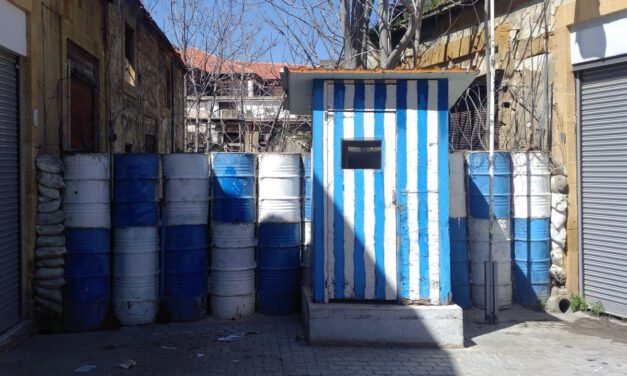
Cyprus is a country that on paper is whole, but in reality is divided into several parts. Greeks, Turks, Cypriots and the United Kingdom have all staked claims on the island, with the UN in the middle, doing their best to maintain the peace. But what made Cyprus into an island of lines?
What do you do when a building important to your city’s history is inaccessible? When you can see it, but simply cannot get anywhere near it? This is the question facing the Ledra Palace Hotel in Nicosia, the capital of Cyprus and one of the last few divided cities in the world. One group of researchers seems to have found a solution, using cutting edge tech.
Read MoreReading time: 4 minutes
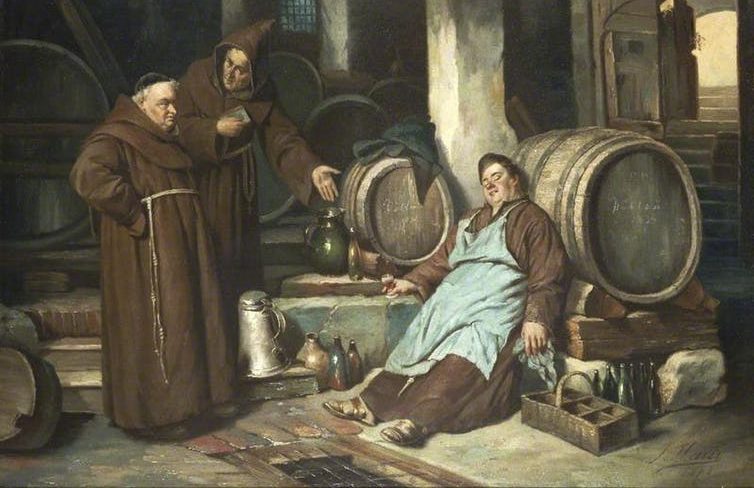
Why do humans like to get drunk? Scientists have written off our affinity for intoxication as an evolutionary mistake, a trick that humans have developed for gaming our biological reward system into releasing little shots of pleasure for no good reason. This, however, is not a satisfying explanation. It should puzzle us more than it does that we have devoted so much ingenuity and concentrated effort to getting drunk.