
History Guild publishes articles that provide interesting insights into history. We cover all aspects of history, from around the world and across time.
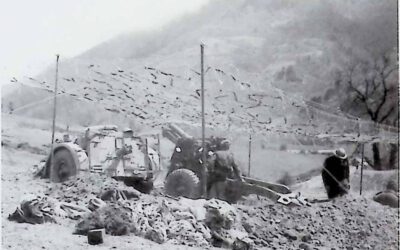
85th Anniversary of the Battle of Pinios Gorge – A Tough Fight
Reading time: 16 minutes
85 years ago today hundreds of young Australians and New Zealanders were digging into the dry soil of central Greece, preparing to meet the advancing juggernaut of the German army. They fought hard, buying the time the rest of the Allied force needed to withdraw in good order further south.
The battle of Pinios Gorge, also known as the battle for the Tempi valley, was a pivotal rearguard action fought by Anzac troops – mostly made up of Australians – from the 17th to the 18th of April, 1941. Though successful in its main goal, delaying the German advance toward the central Greek town of Larisa, it was also a case study of the things that can go wrong in the fog of war.
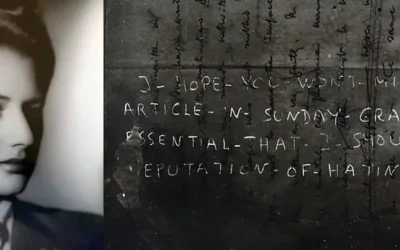
The double agent who hid D-Day from the Nazis: Elvira Chaudoir
Reading time: 8 minutes
Elvira Chaudoir (1911–1996) served as a double agent for the British Secret Services during the Second World War. A life of charm, high-stakes, and duplicity saw her play a cunning role in the Allied victory at D-Day.
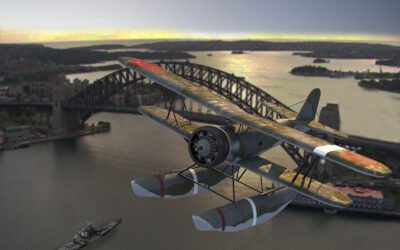
The confused identity of the Japanese submarine aircraft that overflew Sydney
Reading time: 26 minutes
In mid-1942 Sydney Harbour was attacked by a midget submarine raid. Some days before, aircraft launched from the mother submarine flotilla overflew the city, to check for targets. Somewhat unbelievably, the aircraft were not identified or fired at, despite being marked as Japanese.
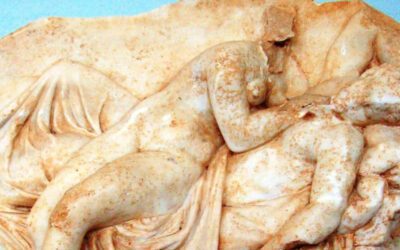
How to party like an ancient Greek
Reading time: 4 minutes
Parties in ancient Greece were wild, with evidence of copious alcohol and sex. That’s the popular idea that endures today. But there were different types of parties at the time. Not all involved lots of alcohol and debauchery. Some featured moderate eating and drinking, and intellectual conversation. So what actually went on at these parties? And how exactly do you party like an ancient Greek?
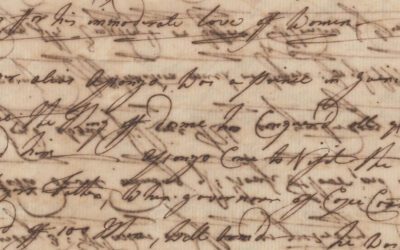
Apongo was a rebel leader in Jamaica – a diary entry sheds light on his west African origins
Estimated reading time: 6 minutes
For over three centuries, between 1526 and 1866, at least 10.5 million Africans were forcibly trafficked to the Americas in the transatlantic slave trade. Over half of them (with known places of departure) left from a 3,000km stretch of the west African coast between what are today Senegal and Gabon. Scholars trying to uncover the lives of these diasporic Africans are forced to work with historical records produced by their European and American enslavers. These writers mostly ignored Africans’ individual identities. They gave them western names and wrote about them as products belonging to a set of supposedly distinct “ethnic” brands.
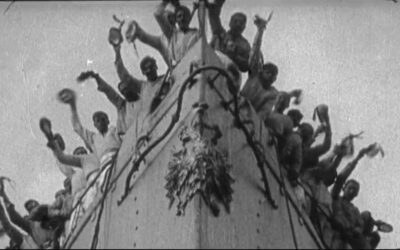
Battleship Potemkin at 100: how the Soviet film redrew the boundaries of cinema
Reading time: 5 minutes
Eisenstein’s growing international status did little to protect him at home. As the 1920s gave way to the 1930s, the tides of Stalinist cultural policy began to turn sharply against him. Eisenstein’s approach was profoundly out of step with the new aesthetic of Socialist Realism, which demanded clear narratives, heroic characters and unambiguous political messaging. Where his signature technique, montage, was dynamic and dialectical, Socialist Realism insisted on straightforward storytelling and easily digestible moral lessons. As a result, Eisenstein found himself accused of obscurity, excess and political unreliability.
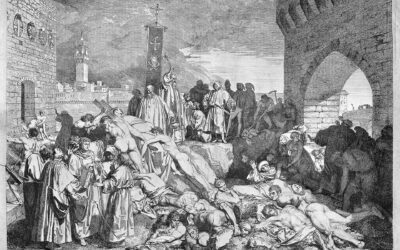
Worker Power: How the Black Death Revolutionised Workers’ Rights
Reading time: 7 minutes
Despite afflicting the world in a serious measure for less than a decade, the black death, also known as the plague, is both one of the deadliest diseases to ever set upon humankind, and likely the most famous.
Between 1348 and 1351, in just 3 years, it’s estimated that the black death reduced the population of England from 4.8 million to 2.6 million, down by roughly 46%.
A Brief History of Fashion as a Status Symbol
Reading time: 7 minutes
Since humans first began draping themselves in animal skins and walking upright, we have developed a sense of fashion – often both with a sense of beauty and as a status symbol, alongside practical uses of warmth and protection.
As far as we know, humans are the only animals to wear clothes regularly and of their own choice (though evidence suggests fish have a sense of fashion) – and a combination of the age of lice, and tools for gathering animal pelts suggests humans have been wearing clothes for over 300,000 years.
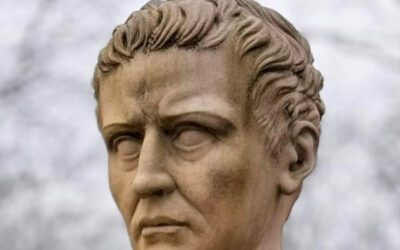
Jewelled eels, beards of gold and unfathomable cruelty: 5 of ancient Rome’s most eccentric leaders
Reading time: 5 minutes
Ancient Roman political leaders could be violent and cruel. Some had odd tastes and were out of touch. Others had wildly eccentric habits that might seem amusing today. But eccentric behaviour combined with almost unlimited power, made some Roman leaders dangerous and unpredictable.
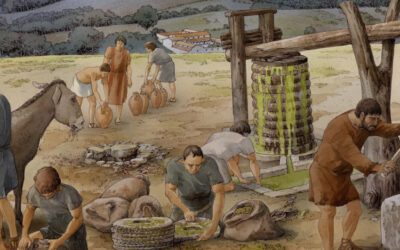
Olives have been essential to life in Italy for at least 6,000 years – far longer than we thought
Reading time: 6 minutes
How far back does the rich history of Italian olives and oil stretch? My new research, synthesising and reevaluating existing archaeological evidence, suggests olive trees have been exploited for more than 6,000 years. The first Italian olive oil was produced perhaps 4,000 years ago.
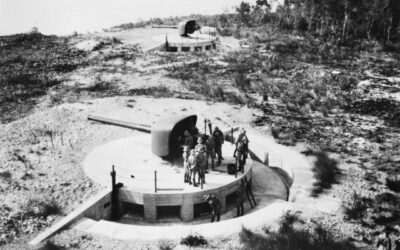
Firepower:Lessons from WWII Seminar – Melbourne
March 19th 2026 @ 5:00 pm - 9:00 pm Firepower: From Lavarack to the Levant to the Littoral Lessons from World War II Presented by The Royal Australian Artillery Historical Company Download the event flyer here to share with your Friends, Colleagues and...
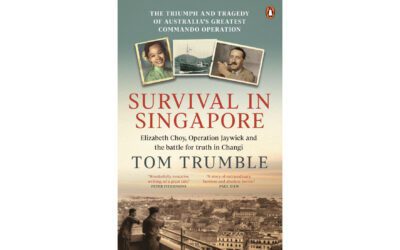
Survival in Singapore: The Triumph and Tragedy of Australia’s Greatest Commando Operation – Book Review
Reading time: 8 minutes
Tom Trumble’s Survival in Singapore offers an unsettling glimpse into one of the darkest chapters of Singapore’s wartime experience – the cruelty unleashed in the wake of Operation Jaywick. Jaywick is somewhat well remembered in Australia, as a daring raid by Australian and British commandos who sailed a disguised vessel, HMAS Krait, through enemy-held waters, hid in the Riau archipelago, and used folboat canoes to attach limpet mines to Japanese shipping in Singapore Harbour. Ships were sunk and damaged; the mission was regarded as ‘tactically brilliant’. Trumble’s book does not deny that brilliance. Instead, it shifts the spotlight to what is far less known and far more confronting; the hideous aftermath inflicted on civilians and internees by the Japanese security apparatus, who were determined to prove the raid must have been enabled by saboteurs from within.
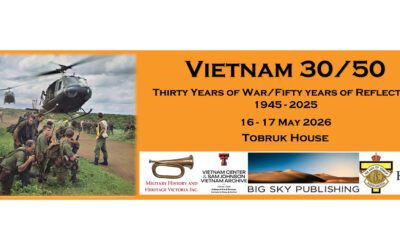
VIETNAM 30/50 Conference – Thirty Years of War/Fifty Years of Reflection – 1945-2025
Military History Conference - Melbourne and Online - Saturday 16 May 2026 9:00 AM - Sunday 17 May 2026 5:00 PM The 30 year war in Vietnam, from 1945-1975, was brutal and devastating. Book Now It killed and maimed hundreds of thousands of both soldiers and civilians on...
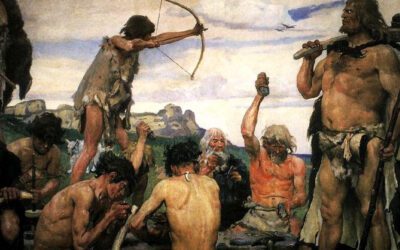
Timeline of Prehestory and Antiquity
Reading time: 9 minutes
The text outlines key events in Earth’s and humanity’s history, spanning from the Chicxulub meteor impact 65 million years ago to the 536 AD Dust Veil Event, focusing on major environmental and historical transformations like the crossing of Wallace’s Line, the Agricultural Revolution, the end of the last Ice Age, the North Sea flooding, and the environmental impacts of the Roman Empire.
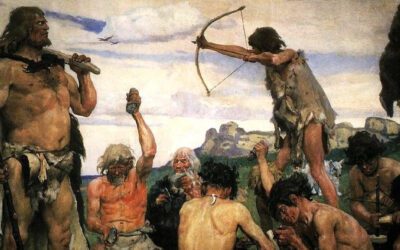
Why does culture sometimes evolve via sudden bursts of innovation?
Reading time: 6 minutes
We can see evidence of this cumulative culture in the archaeological record; over time, there’s an accelerating increase in the number of tools people use. But the archaeological record reveals another pattern, too: there’s also evidence for large-scale losses of culture. For example, archaeological excavation suggests that Aboriginal populations in Tasmania lost numerous technologies over time, including nets, bone tools and warm clothing, even though these tools might still have been useful.
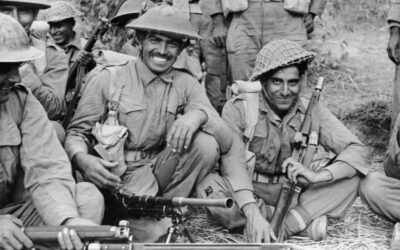
Report on the British Indian Army, 1943
Reading time: 3 minutes
Over two million British Indian Army troops fought in the Second World War. This 1943 War Office document reported on the army’s battle readiness and made recommendations for its development. As India was part of the British Empire when the Second World War broke out, the British Indian Army was called upon to serve in the Allied effort. A volunteer army, rather than a conscripted one, it entered the war as a force of around 240,000.
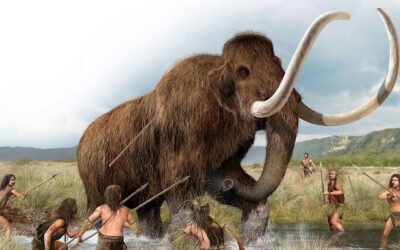
How the extinction of ice age mammals may have forced us to invent civilisation
Reading time: 6 minutes
Why did we take so long to invent civilisation? Modern Homo sapiens first evolved roughly 250,000 to 350,000 years ago. But initial steps towards civilisation – harvesting, then domestication of crop plants – began only around 10,000 years ago, with the first civilisations appearing 6,400 years ago.
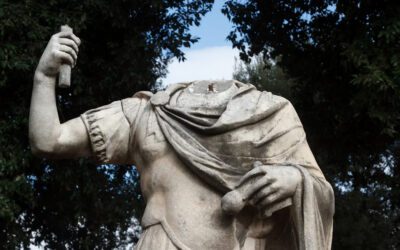
What was damnatio memoriae? How to get cancelled in Ancient Rome
Reading time: 5 minutes
People throughout history have deliberately tried to forget corrupt or criminal leaders who offend the public’s sense of morality or justice. The term damnatio memoriae (“condemnation of memory”) describes this kind of deliberate forgetting in ancient times.
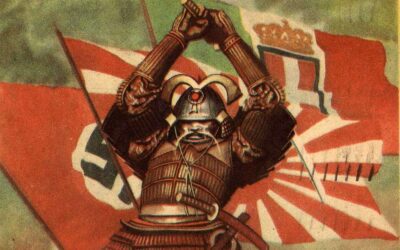
The Uncountable Crimes of Imperial Japan
Reading time: 8 minutes
In the west, and especially Europe, the most horrific regime of WWII is often portrayed as the Nazi regime, with Imperial Japan’s role in the wider world war being somewhat neglected – most well known for being the victim of the world’s first nuclear weapons.
What is often not as well-known is just how brutal and cruel the Imperial Japanese Government was.
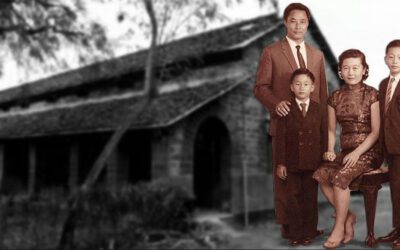
1962’s Sino-Indian border war lasted four weeks – internment of India’s Chinese community lasted years
Reading time: 6 minutes
Tensions had been mounting for months on the border between India and China and on October 20 the Chinese People’s Liberation Army attacked Indian forces on disputed territory and started the 1962 Sino-Indian war.
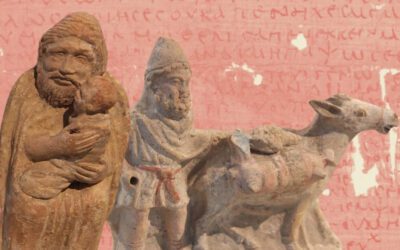
What were the Greeks and Romans like? Their letters suggest they weren’t so different from us
Reading time: 5 minutes
When we read about the Greco-Roman world, we often hear the stories of famous and wealthy men and women. But the letters of ordinary people, preserved on papyri in Egypt, show us what they were thinking and doing. Human nature, their contents suggest, hasn’t changed much.
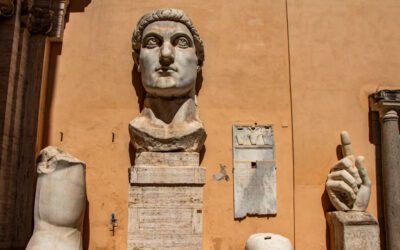
Skyrocketing prices are an age-old problem. Here’s how Roman emperors battled runaway inflation
Reading time: 5 minutes
For much of the third century, the Roman Empire faced unprecedented crises, including foreign invasions by the Persian Sasanians and conflict with various Germanic tribes, such as the Goths. There were also civil wars, plagues, disease outbreaks and food shortages. This period is now known as the Crisis of the Third Century. Political stability was a distant memory; dozens of short-reigning emperors were installed and deposed as these problems grew worse.
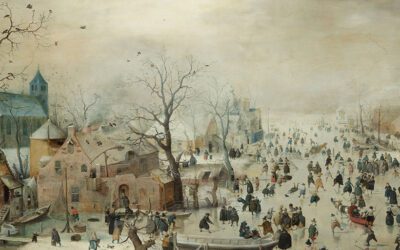
Little Ice Age
Reading time: 9 minutes
The Little Ice Age was a period of regionally cold conditions between roughly AD 1300 and 1850. The term “Little Ice Age” is somewhat questionable, because there was no single, well-defined period of prolonged cold. There were two phases of the Little Ice Age, the first beginning around 1290 and continuing until the late 1400s. There was a slightly warmer period in the 1500s, after which the climate deteriorated substantially, with the coldest period between 1645 and 1715 . During this coldest phase of the Little Ice Age there are indications that average winter temperatures in Europe and North America were as much as 2°C lower than at present.
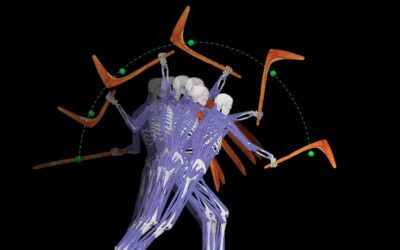
First-ever biomechanics study of Indigenous weapons shows what made them so deadly
Reading time: 5 minutes
Archaeological evidence for interpersonal violence (injuries of skeletal remains) is rare in Australia, but when found, usually consists of depressions to the skull and “parrying fractures”. These are breaks to the arm bones above the wrist, resulting from the raising of the arm in defence against a weapon. This can be either from a direct blow or a glancing blow off a shield – like the one used in this experiment.