Reading time: 3 minutes
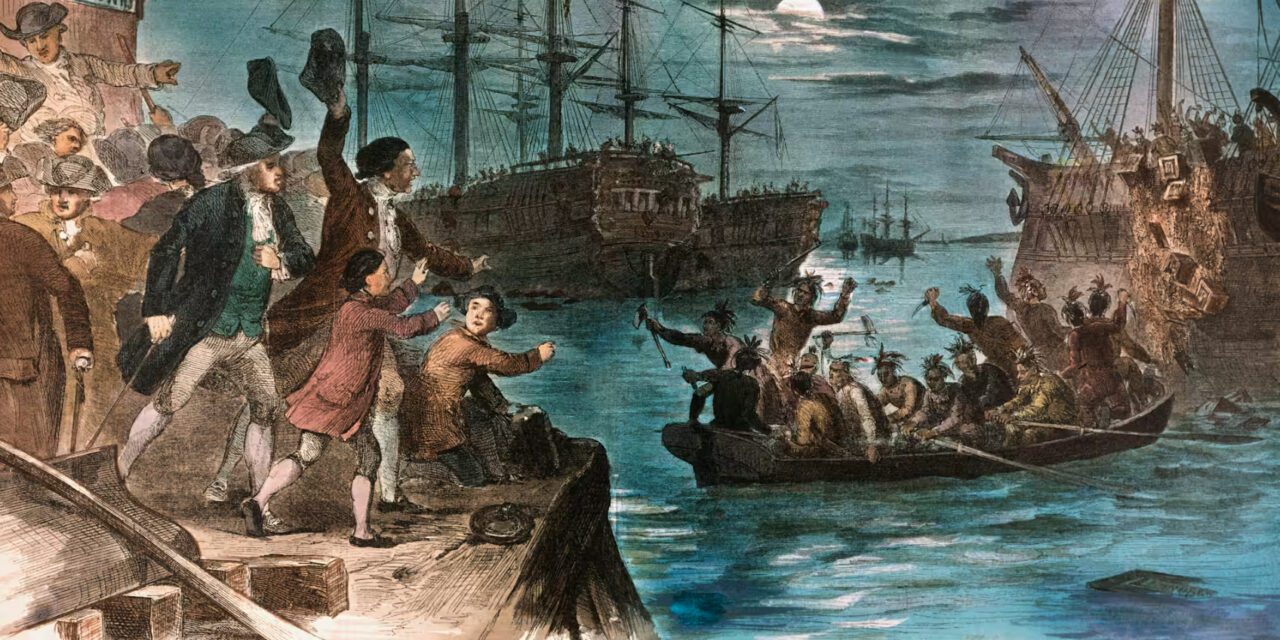
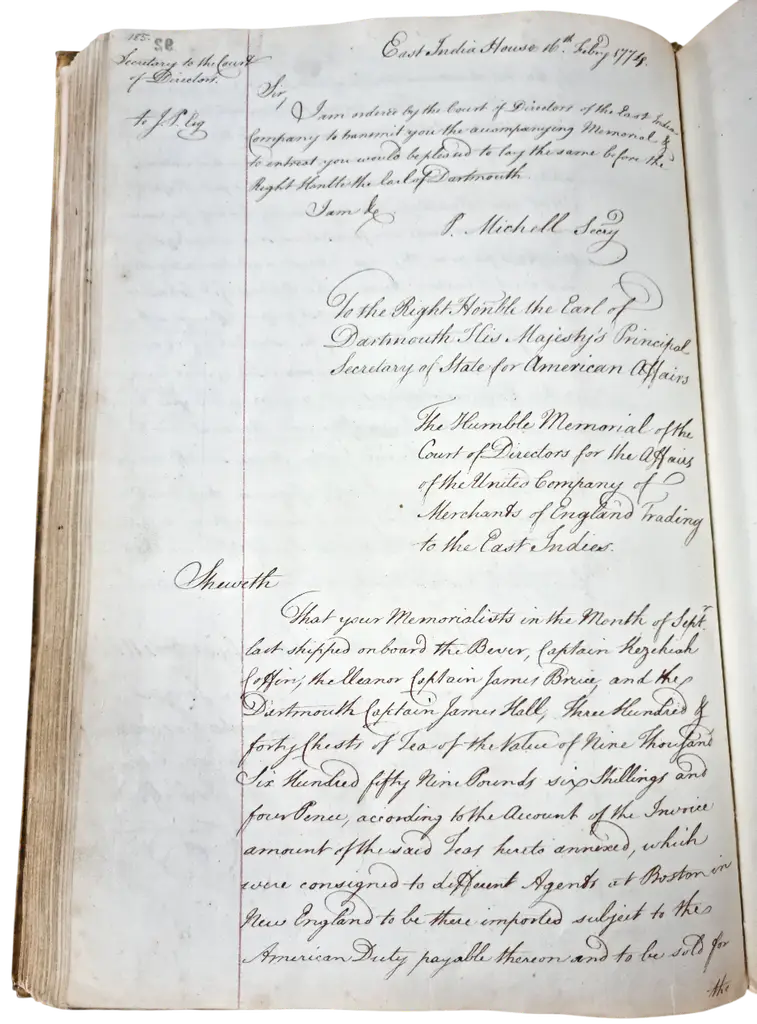
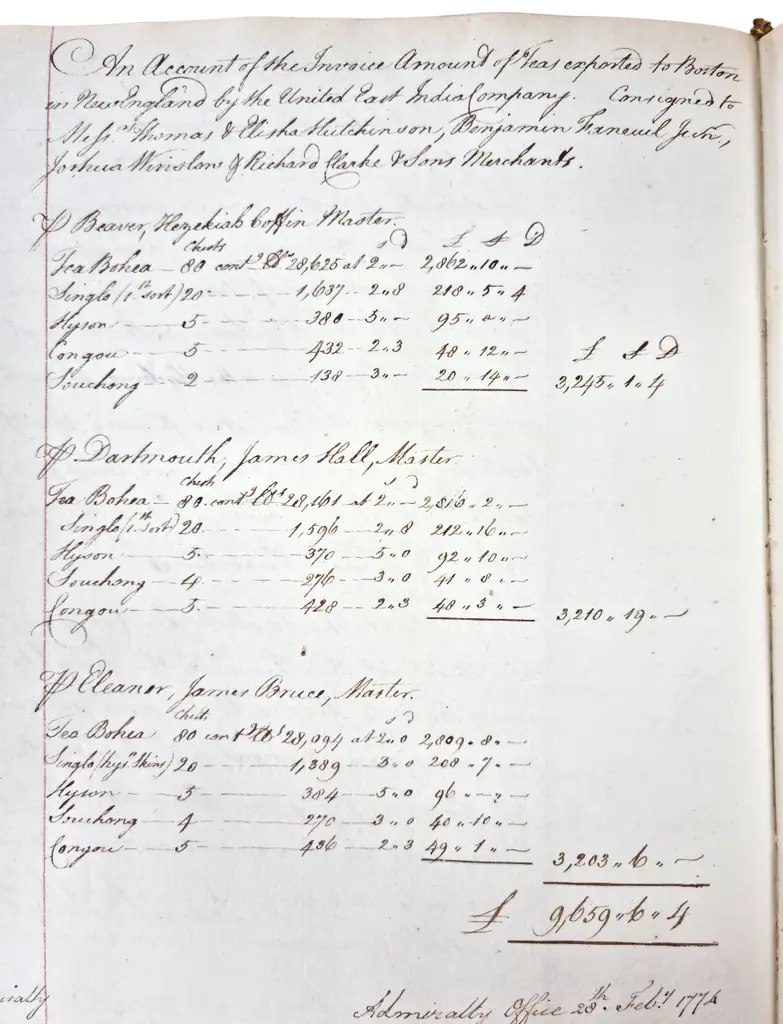
On 16 December 1773, American colonists threw 340 chests of tea into Boston harbour in an event now known as the Boston Tea Party. This letter from the East India Company gives a breakdown of teas destroyed – and asks for reimbursement.
Why this record matters
In 1763 Britain signed the Treaty of Paris, becoming the dominant imperial power in North America. Parliament then sought to tax their subjects in America to recover from a costly war with France, and to better defend those colonies from future invasion.
This uncovered deeply opposing views. Parliament believed that they had the right to levy taxes upon all subjects within King George III’s dominions, while British subjects living in America thought differently. They were not against paying taxes to the British Crown, but believed that they should set those taxes, and be represented in Parliament.
The Tea Act, passed in spring 1773, brought this tension to a head. The act aimed to help the East India Company, which faced financial difficulties, by giving it a monopoly on the tea trade with the American colonies. It also hoped to encourage the payment of tea duties in America.
Instead, colonists sent the tea ships arriving to Philadelphia and New York back to Britain. In Charleston, tea ships’ cargo was left unopened on the docks to waste. In Boston, colonists refused to let tea be unloaded – leading to that fateful night now called the Boston Tea Party, where demonstrators threw chests of it into the harbour.
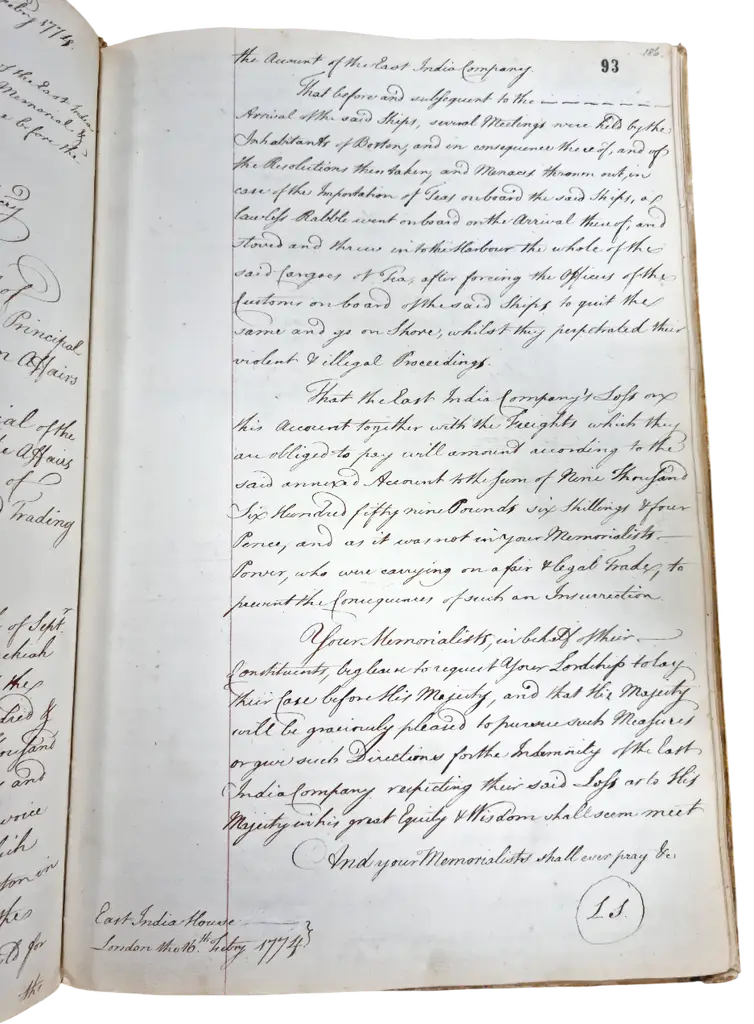
As the owner of that tea, the East India Company wrote this letter to the British government in early 1774, requesting compensation for the lost cargo. It gives a detailed breakdown of teas destroyed when, in the company’s words, ‘a lawless rabble went onboard on the arrival thereof, and stored and threw in to the harbour the whole of the said cargoes of tea’.
Pressure on the British Government to compensate the East India Company, and to prosecute the ringleaders of the Boston Tea Party, led to the enactment of the so-called Intolerable Acts. These were sanctions on trade and government in Boston and Massachusetts that were fiercely rejected in the British colonies of North America.
These acts permanently damaged the relationship between Britain and its colonies in North America, directly contributing to the American Revolutionary War and, ultimately, the United States’ Declaration of Independence in 1776.
This article was originally published in the National Archives.
Podcasts about the Boston Tea Party
Articles you may also like

General History Quiz 179
1. In 2005 Hurricane Katrina devastated New Orleans. How many people were killed in the storm?
Try the full 10 question quiz.
How the shadow of slavery still hangs over global finance
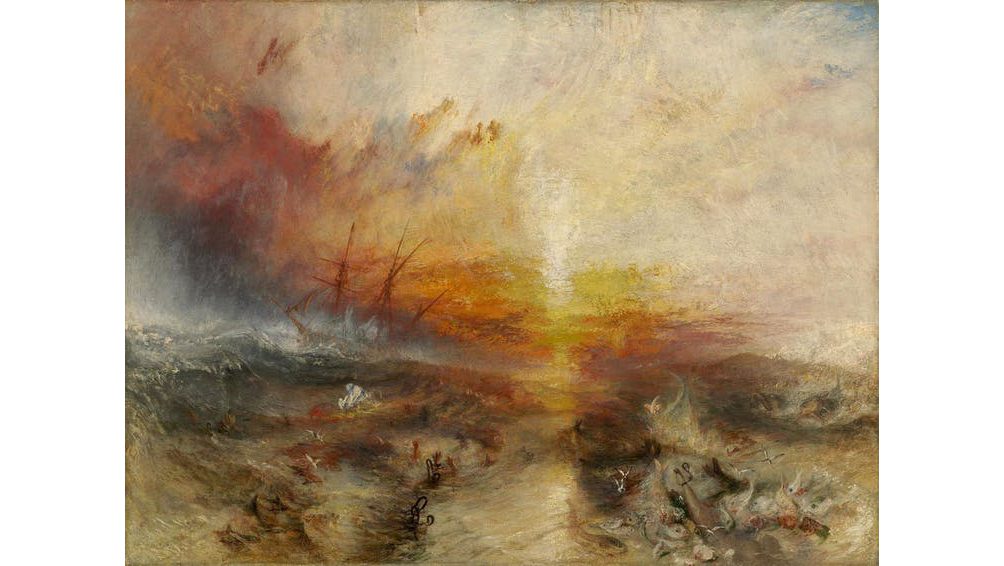
When the infamous Zong trial began in 1783, it laid bare the toxic relationship between finance and slavery. It was an unusual and distressing insurance claim – concerning a massacre of 133 captives, thrown overboard the Zong slave ship. By Philip Roscoe, University of St Andrews. The slave trade pioneered a new kind of finance, secured on […]
A slave state – how blackbirding in colonial Australia created a legacy of racism
Reading time: 46 minutes
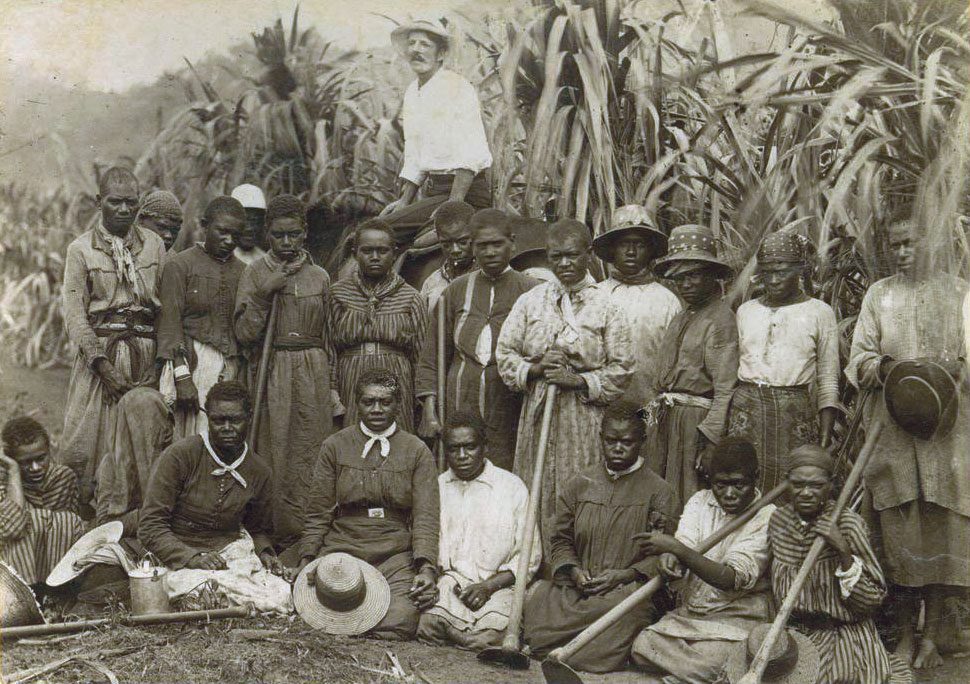
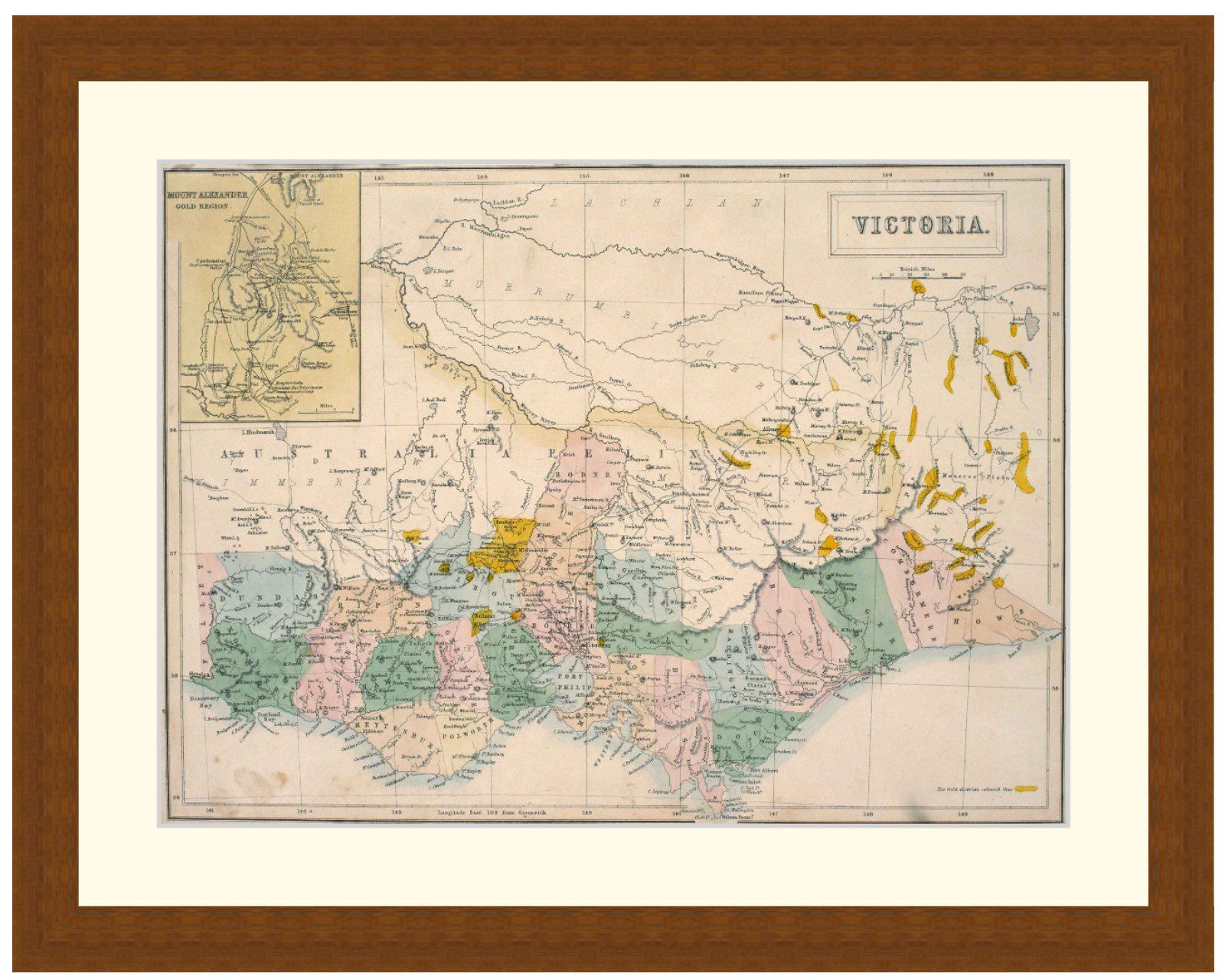
The French historian Ernest Renan described forgetting as “an essential factor in the creation of a nation”, since patriots do not want to remember the “deeds of violence” at the origin of all political formations. In the Australian context, a strange contradiction contributes to the ongoing amnesia about slavery and its consequences. From the very beginning, enslavement shaped white settlement in Australia – and so, too, did abolitionism. That paradox, a peculiar entwinement of two ostensibly antagonistic impulses, makes for a complicated narrative, one that cannot be grasped simply as a local version of the better-known American story.
This article was first published by The National Archives. It is reproduced in accordance with the Open Government Licence v3.0.