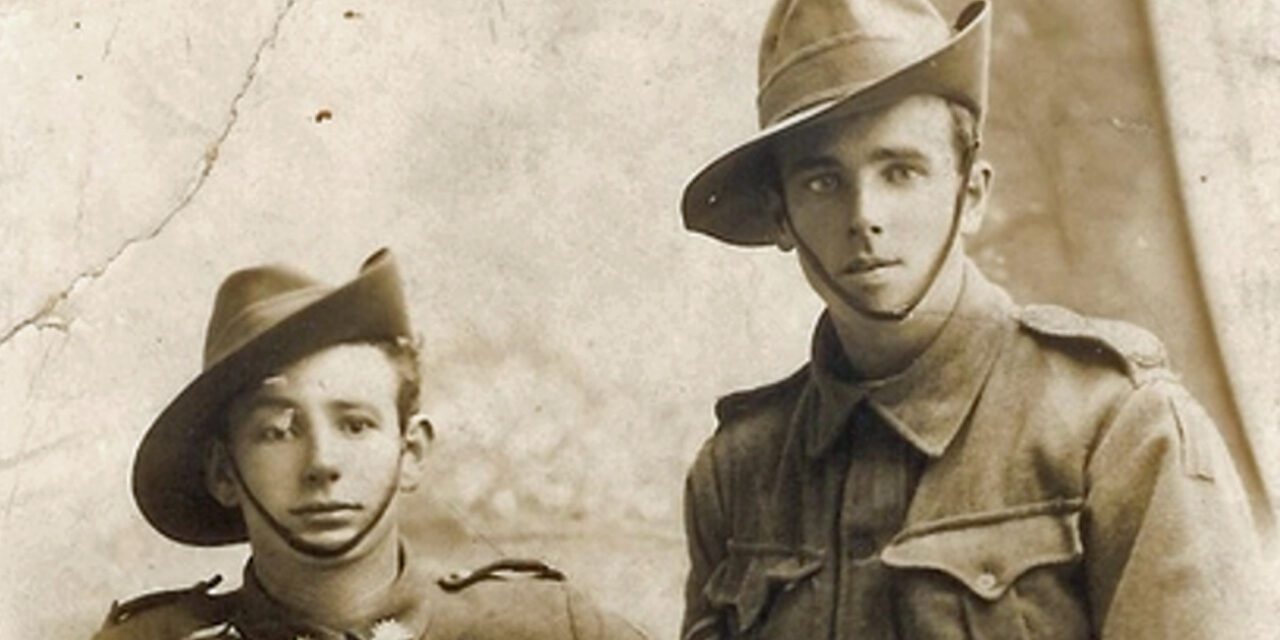
Remembering the fallen and the missing
Reading time: 18 minutes
When I started assembling this address I spent some time considering;
“What is the point?” of an Anzac Day address
“What is the point of remembering events from over 100 years ago?
Is there a need for such commemoration in this modern day and age?
Does it fit with our “modern” understanding of our role in society?
What are we really commemorating?
So many questions that arise!
By Robert Thomas
Commemoration of the Great War began while it was an active conflict and reflected a massive change in attitudes that had occurred during the Victorian Era. The Napoleonic Wars ended with the Battle of Waterloo on 18th June 1815. If you visit that battlefield today, you will find a large memorial where the ridge that defined the battlefield previously stood. But you will not find a single commemorative cemetery. The treatment of the dead and wounded after that battle does not fit our modern mindset.
“Commemoration” evolved as the war progressed and it is interesting (if somewhat distressing) to look at the development of commemorative sites from hurried burials in sheltered places, haphazardly placed, possibly dug at night or between artillery attacks, evolving into sprawling edifices with graves aligned with mathematical precision so that lines and ranks form regardless of the angle of your approach to the field.
Monumental structures arose from the fields after the conflict. The British Memorial at Thiepval, Menin Gate at Ypres, The AIF Memorial at Villers – Bretonneux, the French Ossary at Verdun.
With Peace the “commemoration industry” arose around these places. British Historian Lyn Macdonald referred to “The booming mecca of the first mass-explosion of tourism in history” to such an extent that in 1930, One hundred thousand people had signed the visitors’ book at the Menin Gate in a period of three months.
Why? Perhaps this pilgrimage was driven by the feelings of the survivors – loss, guilt, sadness.?
“Known Unto God”.
Rudyard Kipling stands out in this commemorative “Industry”. Many of the older generation will have read some of his works or know them from film adaptions. The Jungle Book, The Man who would be King.
Yet we repeat his words EVERY Anzac Day and if you are in an RSL Club at Sunset you will on any day – The refrain from “The Recessional” :
Lest we Forget, Lest we forget.
When was it written?
In 1897 for Queen Victoria’s diamond Jubilee. It is a call to remember (with humility) the sacrifice of others and the importance of service to others. So appropriate!
Kipling was well connected in British society and because of his position he was able to influence those in power. He was responsible for the script that appears on all British Commonwealth Cemeteries –
“Their name liveth for evermore”
and as mentioned earlier the script on the white marble headstones of those unidentified
“Known unto God”.
In the Hunter Valley town of Singleton there are a number of soldiers on memorials who have no known burial place.
In his 2002 publication “Where Heroes Sleep”, Hunter Valley Historian, David H Dial listed twenty five who had no known burial place – Known unto God.
Five on the Lone Pine Memorial at Gallipoli, Turkey,
Ten on the Menin Gate Memorial at Ypres in Belgium,
Seven on the wall at Villers – Bretonneux,
One on VC Corner Memorial at Fromelles and
One in Jerusalem, Israel.
This article will look at five of those.
Charles Harvest ANDREWS
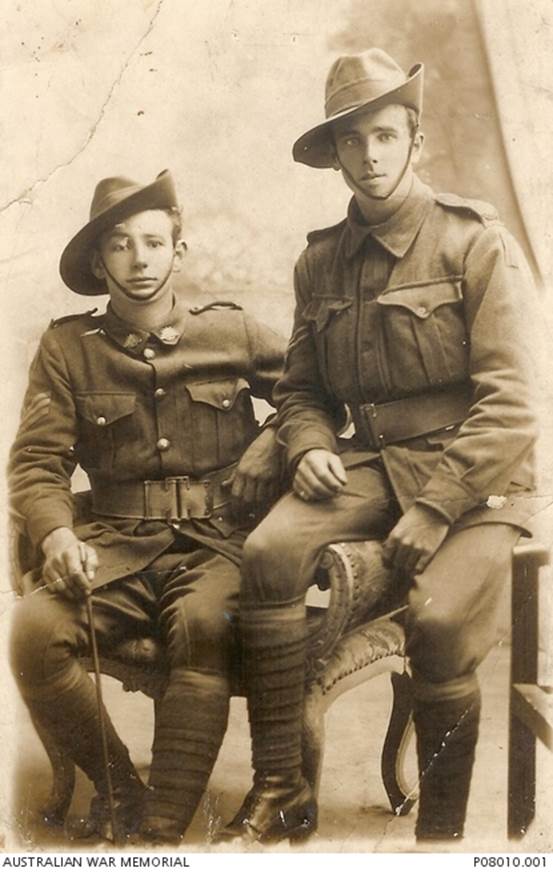
Charles Harvest Andrews was an 18 year old Labourer when he enlisted on 17 August 1915. On his Attestation Form he listed his Father Thomas Charles Andrews of “Combo” Singleton as his Next of Kin. Page 3 of that form tells us he was 172cm tall, weighed 59kg and his chest measured 81cm and 88cm expanded; by modern standards that is fairly slender.
Andrews had 4 years experience in the Senior Cadets under the compulsory service requirements introduced in Australia following Lord Kitchener’s visit in 1910. He then transferred to the local Infantry Militia unit, the 14th Battalion and was serving with that unit when he applied to join the AIF.
He was allotted to the 1st Training Battalion Reinforcements and embarked from Australia on 20 December 1915 and was then transferred to 54th Battalion as part of the doubling of the size of the AIF on 16th February 1916.
Andrews served in the Canal Zone as part of the defence of Egypt against expected Turkish invasion and was appointed Lance Corporal on 1st May 1916.
In mid-1916, the AIF’s infantry divisions were sent to Europe to fight on the Western Front. After arriving at Marseilles in June 1916, the battalion was committed to the fighting the following month. In an attempt to distract the Germans from the Somme Offensive, the 5th Division made the AIF’s debut in Europe, launching a diversionary attack at Fromelles. The attack was disastrous for the Australians, and it was later described as “the worst 24 hours in Australia’s entire history”. Having gone in during the first wave of the assault, the 54th suffered heavily, losing 65 percent of its strength, equating to 20 officers and 518 other ranks.
After the battle, the battalion regrouped at Bac-St-Maur before taking up defensive positions. There Andrews was appointed Acting Sergeant. Reinforced, the Battalion remained at the front until September, rotating between the main defensive position and the village of Fleurbaix.
After a month of rest, the battalion returned to the Somme in October, occupying the trenches around Flers, where they suffered further losses. While his comrades enduring the coldest winter in 40 years in the Somme, Andrews enjoyed 2 weeks leave in Britain and had his promotion confirmed.
The 54th joined the Allied pursuit of the Germans as they withdrew to the Hindenburg Line in early 1917.
A period of intense training behind the lines followed, before the battalion moved to the Ypres salient. While this was happening Andrews was posted to 14th Training Battalion in the UK where he was severely reprimanded for Neglect of Duty.
On return to 54th Battalion he was again severely reprimanded by his CO for Conduct Prejudicial to good order in that his platoon was late on parade. Ensuring 20 odd men, probably all older than him, were on parade on time would not have been an easy task.
He took part in his unit’s involvement in Menin Road, Polygon Wood and Broodseinde; operations that were costly to the physical and mental well being of the troops involved.
In early 1918, he was promoted to Warrant Officer Class II and appointed Company Sergeant Major. In March the German forces launched Operation Michael, an attempt to end the war before the American Expeditionary Force could become operational. On the 24th March he was in a trench in a quiet sector as the 54th Battalion were preparing to meet the new offensive when he was hit by “a stray machine gun bullet” and killed instantly.
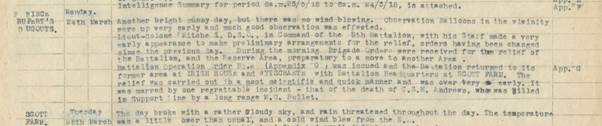
He was buried in the Irish House Cemetery but later his grave could not be identified so it is likely that he is one of the 40 buried there who are “Known unto God”.
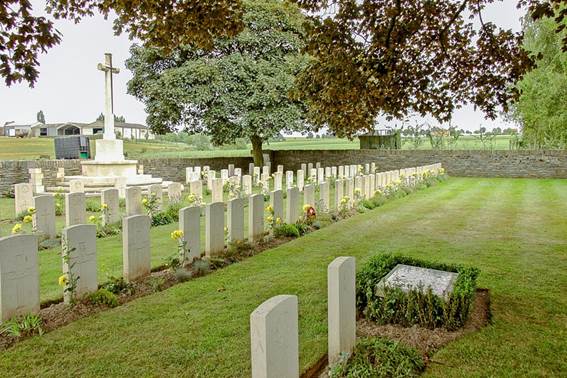
Harold Edward BANGLE Regimental Number 1141
Aged 22 Years and 3 months when he enlisted on 22nd March 1915. He was working as a grocer in Singleton and listed his father Henry Bangle of George Street Singleton as his Next of Kin. He was 172cm tall, slender in build and is described as having a dark complexion, Brown eyes and dark hair.
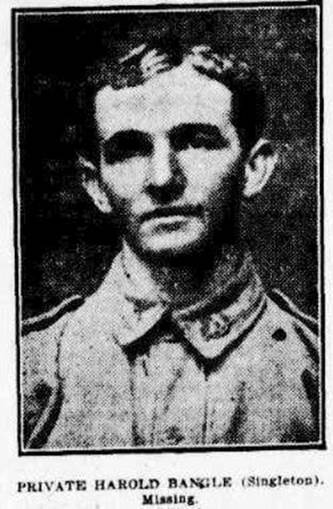
Like a number of his comrades, he had 2 years service with the local Militia unit, the 14th Infantry Battalion.
During initial training he and a number of Hunter Valley recruits were allocated to the 18th Battalion. They embarked on 25th June 1915 on HMAT Ceramic and arrived on Gallipoli as fresh-faced troops eager for battle. Orders were issued almost immediately for the battalion to move up to the front line. Many of the men were not aware that they were to assault Hill 60 until just before 5.00am on the morning of 22 August 1915.
After failing to make headway through the day someone gave the order to withdraw (although no one knew who had issued it). Those that managed to survive were shattered with the loss of so many friends and (in some cases) brothers.
Just five days later the Battalion was ordered back into the line for a second attempt to remove the Turks from Hill 60. This time they were successful in securing a foothold on the hill but many more men were killed
It was during this assault on Hill 60 that Harold Bangle fell. There are two eyewitness accounts of his death. Both are different but agree he died instantly after being hit in the head by a projectile. His body was not recovered at the time and by the time Australian forces returned to Gallipoli at the end of 1918, identification of remains was not possible.
He is remembered on the Lone Pine Memorial.
Sedgwick MAYNARD
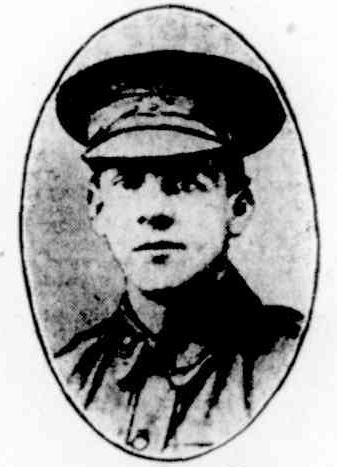
Son of William Maynard of Edward Street Singleton. When he enlisted on 4th September 1915 at the age of 18 years 5 months he was employed as a cleaner with the Loco Office.
He had 4 years in the Senior Cadets and 1 year with 14th Militia Battalion. His file even notes that he had returned all his equipment that had been issued by 14th Battalion.
He was allotted to the 30th Battalion which embarked from Sydney aboard HMAT Ballarat on 18th February 1916, arriving in Suez on 23rd March 1916.
The 8th Brigade joined the newly raised 5th Australian Division in Egypt and spent some time in the Canal Zone before it proceeded to France in June 1916. The 30th Battalion’s first major battle was at Fromelles on 19 July 1916. It was tasked with providing carrying parties for supplies and ammunition but was soon drawn into the vicious fighting. Maynard was wounded in the right arm during the battle and sent to Britain for treatment. His father found out that he had been wounded via unofficial sources and when he asked for confirmation was advised that the AIF had no idea about his location or condition and would let him know if they heard anything.
He re-joined his unit on 1st September 1916 and the battalion was rotated in and out of the front line along with others in the brigade, but played no major offensive role for the rest of the year.
In early 1917, the German Army withdrew to the Hindenburg Line. During the general advance that followed, the 30th Battalion had the questionable honour of occupying Bapaume, one of the original objectives for the Somme Offensive of 1916. The Battalion Diary for the last few days of March are brief;
27th March: “Relieved 58th Battalion in Front Line near Beaumetz and again CO assumed command of outposts”
28th March: “Relieved 54th Battalion and marched to Bapaume. 2 OR Killed”
One of those two was Sedgwick Maynard. He is recorded as being buried in the Sunken Road Cemetery near Morchies but when graves were being consolidated after the war his could not be identified. There is only one unidentified grave in this cemetery – I would like to believe that it is his.
After the war, families were sent a publication called “Graves of the Fallen” and enclosed was usually a photograph of their soldier’s grave. When William Maynard received his copy, he wrote across the back of the envelope “I have not received a photograph of my son’s grave” and returned it to the sender.
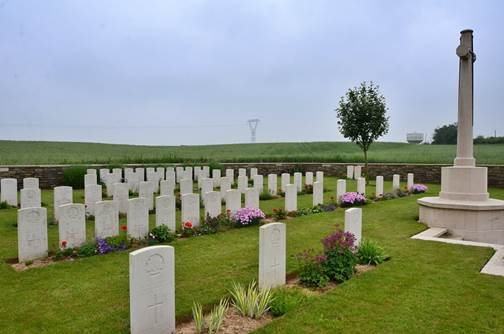
Sunken Road Cemetery near Morchies
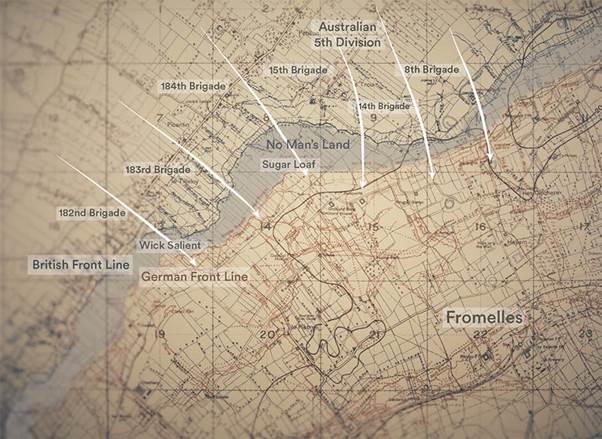
Fromelles Battlefield.
George Edmund SHEPHERD Reg No 85
24 Year old George Shepherd enlisted on 24th August 1914. He had over 6 years service with the local 6th Light Horse Regiment when he enlisted. He was a farmer, as was his father James Shepherd of “Clydesdale”, Singleton. Again we have a medium height, slender build young man, this time though with Blue eyes and Brown Hair.
The 1st Light Horse Regiment was raised, from recruits from New South Wales, at Rosebury Park in Sydney in August 1914. The regiment sailed from Sydney on 19 October and disembarked in Egypt on 8 December.
The Light Horse were initially considered unsuitable for the Gallipoli operation, but were soon deployed without their horses to reinforce the infantry. Shepherd had been Acting Sergeant since shortly after joining up and this was upgraded to Temporary Sergeant in June 1915.
The lack of progress at Gallipoli had caused concern in Britain, so a new front was opened to the north at Suvla Bay. To draw Turkish attention away from this new landing it was decided that a series of distracting attacks were to be launched around the Anzac Cove front line.
The infantry was to attack at Lone Pine on 6th August and the Light Horse were to attack at The Nek and The Chessboard/Dead Mans Gully, while British and Australian Troops under Colonel Monash were to attack via the erosion gullies toward Chunuk Bair where the New Zealanders were to be attacking.
Many readers will remember Peter Weir’s movie Gallipoli (starring Mel Gibson) This film told the story of 3rd LH Brigades attack at the Nek.
1st Light Horse Brigade was assigned the task of attacking the Chessboard about 250m to the South East of The Nek. 1st Regiment was to attack on the left-hand flank of the front, in the region of Dead Man’s Ridge and the Waterfall. 2nd Light Horse Regiment was to attack the right-hand side of the position.
Lieutenant Tinson of Cessnock was given the role of leading the bombing team. According to a letter home from Private E Jones of Cessnock (published in the local news), the group included locals Kempe, Kaiser, Edmunds, Reid, Wilson, the Villis Brothers and Wally Inglis. Also included in the party was Sergeant George Shepherd from Singleton.
According to Jones they formed up around 4am, Tinson shook hands with each of them and wished them luck. At 4.30am they made a dash for the Turkish lines and were hit by heavy fire and bombing. LT Tinson was hit in the leg and his calf was blown away. His men continued on. Most were wounded. Kempe has no known grave. Kaiser’s body was recovered and is buried in Shrapnel Gully Cemetery. Jones and Inglis were wounded, The Villis brothers, Stanley and Frank, were killed at the same time. Shepherd received bullet wounds to his right hip and foot. 200 men were involved in the attack; 147 became casualties.
Shepherd was evacuated to Malta for treatment and returned to Gallipoli on 23rd October and remained there through the ice storms of November before being evacuated in December.
Back in Egypt, the 1st Light Horse Regiment joined the ANZAC Mounted Division. Between January and May 1916, it was deployed to protect the Nile valley from bands of pro-Turkish Senussi Arabs. On 14 May, it redeployed to the Suez Canal and while there Shepherd was promoted to Staff Sergeant.
The 1st Light Horse Brigade played a significant role in turning back the Turkish advance on the canal at the battle of Romani on 4 August. In ensuing days the regiments of the Brigade participated in the immediate follow-up of the defeated Turks, but were soon withdrawn to rest. In September Shepherd was promoted to Warrant Officer Class II and appointed Squadron Sergeant Major.
While resting in El Arish on the Mediterranean Coast in December 1916, he and one of his Corporals went for a swim and the sentry on duty noticed them run from the water and across the beach. A large explosion occurred and both men disappeared. A court of Inquiry found that a Marine Mine had washed ashore and exploded. No remains were found to bury. He is commemorated on the Jerusalem Memorial.
Hassall Marsden Kendall HARDING Reg No 365
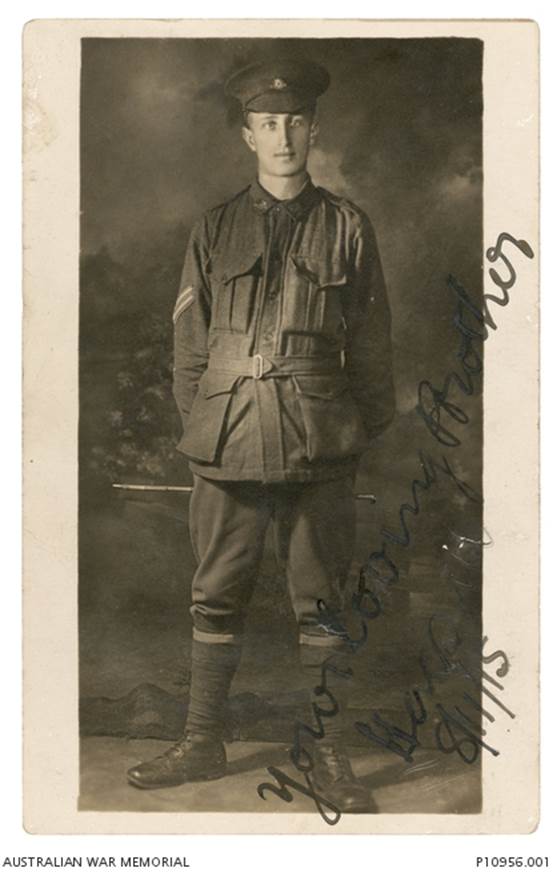
Harding enlisted July 21st 1915 at the age of 20 years and 5 months. 178cm tall – same height as me but even as a 20 year old I weighed much more than 65kg. Slim build, fair complexion, Blue eyes and light brown hair. Employed as a bank clerk and lists his religious affiliation as Church of England – not all that surprising when his first two names are both taken from early characters within the church in New South Wales.
Seven weeks after enlisting he was promoted to Corporal. The 31st Battalion embarked on HMAT Wandilla (A62) from Sydney on 15 November 1915 and arrived in Marseilles on 23rd June.
On 19th July 1916 his Battalion was part of the Australian assault on the Fromelles line that we have mentioned earlier.
Kendall was one of many posted missing. His war had lasted 364 days.
In January 1917 his mother wrote asking for information about him and again in May after having been informed via the Red Cross that he was dead. This probably came about because the Germans had recorded the names of those they buried and advised the Red Cross in Switzerland.
A court of enquiry was held in July 1917 and on 1st August he was declared Killed in Action.
By this time the Red Cross had collected reports of his death from his comrades:
He was seen fighting with a bayonet in the 2nd line of German trenches by Sgt MacDougall
Private Treader saw him shot and killed in the 2nd line of trenches
Corporal McGregor confirmed Treader’s report.
In November 1917 Mary Kendall requested information on his burial site He was commemorated on the VC Corner Cemetery wall with all those missing from the battle – none could be provided and there the story stopped.
Until the late 1990s…..
The location of the missing soldiers at Fromelles became the focus of the now famous and long running investigation by Lambis Englezos and others.
In a paragraph from Robin Corfield’s book published in 2000, that Lambis Englezos first saw a reference to ‘Pheasant Wood’. Lambis has since referred to that reference as ‘serendipity and chance’
He had been to Fromelles in 1996 for the battle’s 80th anniversary, but in 2002 embarked on his quest to find the missing. He was aware of the term ‘Pheasant Wood’ but didn’t know what it meant. This was one of the most significant clues to eventually finding the 250 buried diggers. From this and other sources Lambis became aware of local farmers’ comments about soldiers having been buried in a farmer’s field.
Aerial photographs of the area, taken after the battle, showed what were believed to be burial mounds adjoining a small wood. Lambis thereafter concentrated his investigation on the site. He said: “The research and advocacy was a team effort, with a wonderful result. Ward Selby, John Fielding and I presented to an expert panel in 2005. We made our case for a search of the site suspected of being a burial site, next to the Pheasant Wood. But the panel was insufficiently convinced and unmoved. Then in 2006 everything changed. The German Burial Order of 1916 was found in archives in Munich, Germany.”
2007 saw an exploratory non-invasive survey undertaken at Pheasant Wood, led by Tony Pollard of Glasgow University Archaeology and Research Department. In that investigation, a heart-shaped medallion with ‘ANZAC’ written on it, and a Shire of Alberton medallion were found at Pheasant Wood, which were of Australian origin, in a location at which Australian soldiers had not reached in battle. In 2008, a preliminary and limited excavation was able to be undertaken. Human remains were found…
2009 saw the unearthing of the burial pits at Pheasant Wood, and the beginning of an archaeological excavation in which 250 soldiers’ remains were located
In 2010 the new Pheasant Wood Military Cemetery at Fromelles was dedicated with all the remains unearthed in 2009, reburied in their own dedicated plots. The dedication ceremony took place on 19 July, 2010. The remains of the final soldier to be re-buried were interred at the ceremony, 94 years after the battle which claimed his life. The identities of 96 soldiers had been determined before that dedication took place. Harding is one of them.
As of Anzac Day 2024 a total of 180 Australian soldiers have now been identified. The seven newly identified soldiers’ headstones were rededicated on the 108th anniversary of the battle on 19 July 2024.
Articles you may also like
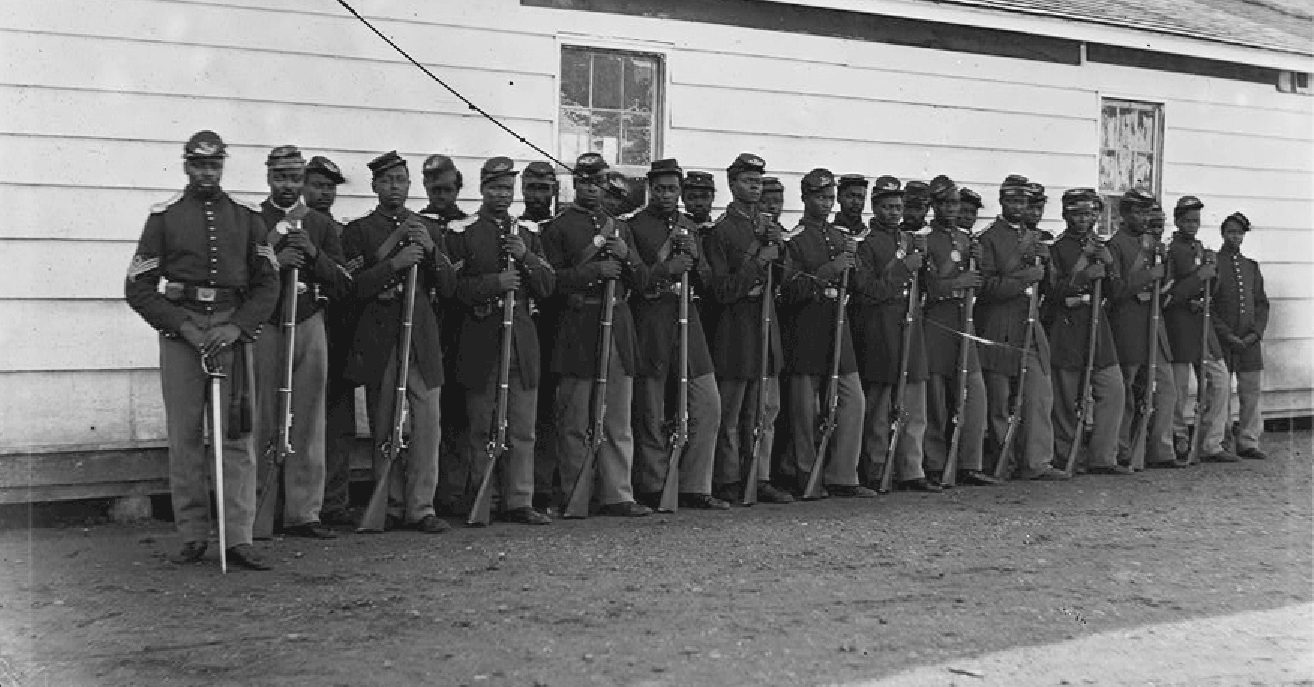
Weekly History Quiz No.238
1.When did Abraham Lincoln make the emancipation proclamation?
Try the full 10 question quiz.
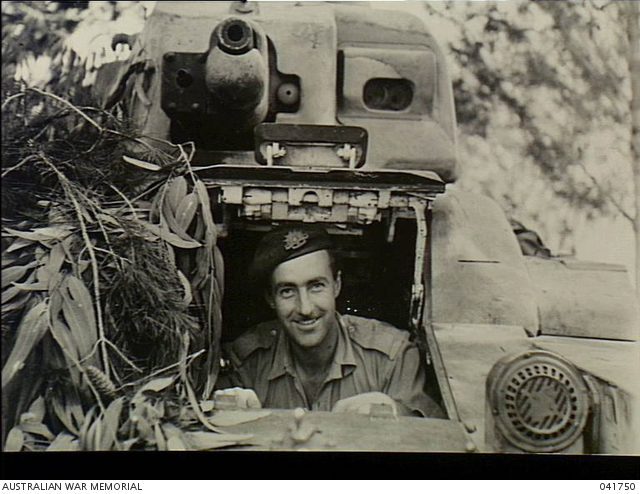
6th Australian Cavalry Reg in the Mediterranean, WWII – Video
The 6th Australian Cavalry Regiment were the first unit of the AIF to see action in the Western Desert in 1940. This is their story.
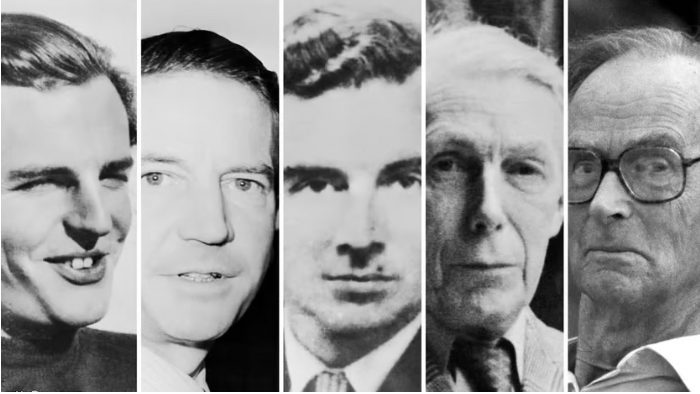
Confessions from the Cambridge Five: a file release from MI5
Reading time: 7 minutes
Over 100 Security Service (MI5) files are being released today covering a wide range of subjects and individuals. Most notably, the files offer fresh perspectives on notorious members of the Cambridge Five spy ring, namely Anthony Blunt, Kim Philby and John Cairncross.
This article is published with the permission of the author. If you would like to reproduce it, please get in touch via this form.